
Diagnose Your Noisy Pool Pump: Repair or Replace?
A loud pool pump is more than an annoyance. It is a mechanical warning. Learn how to identify the sounds of failing bearings, cavitation, and air leaks so you can fix the problem before the motor burns out completely.
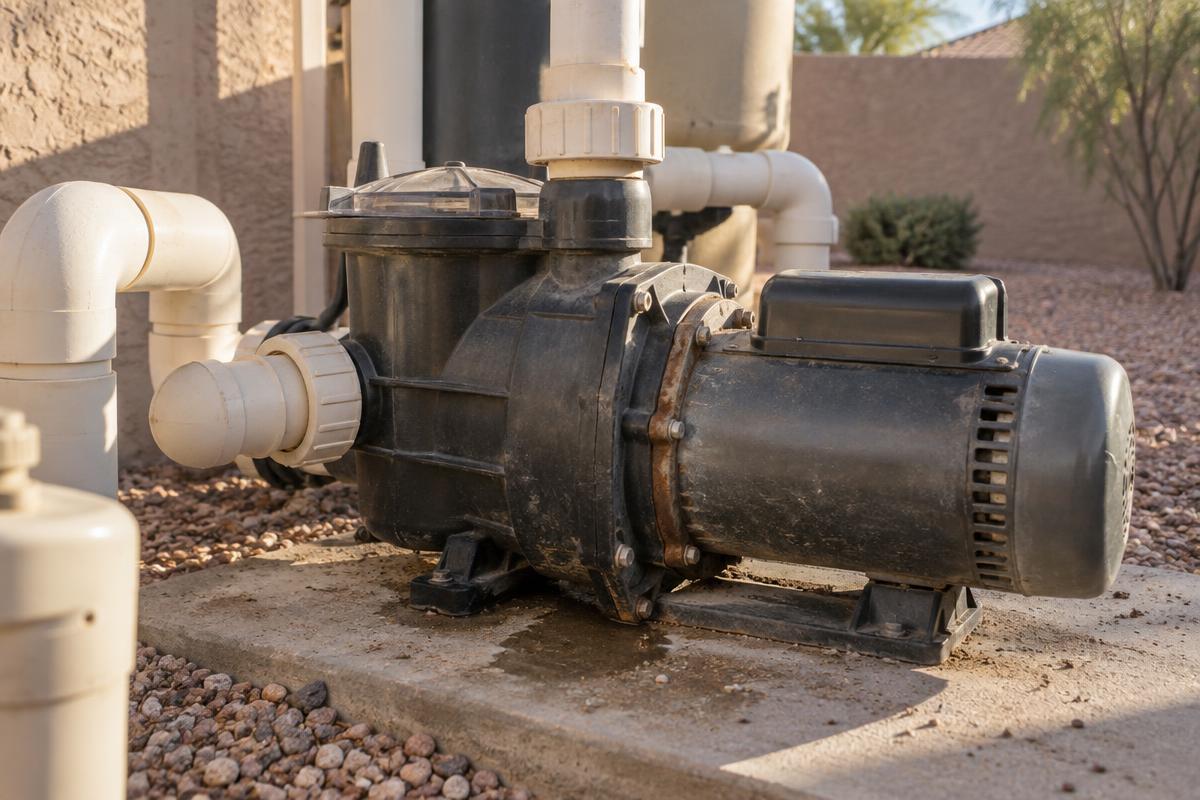
You walk out to your equipment pad and hear a sound that does not belong. Instead of a smooth hum, your pool pump is screeching, grinding, or rattling loudly enough to bother the neighbors.
A pool pump making noise is asking for immediate attention. Motors require proper water flow, airtight plumbing, and intact bearings to operate correctly. When any of these elements fail, the pump creates distinct sounds that tell you exactly what is wrong.
Delaying a fix turns a minor maintenance issue into a costly complete replacement. Finding the root cause requires matching the specific noise to the mechanical failure behind it. Residents needing pool pump repair Gilbert AZ can use these symptoms to decide on the next step.
The goal is to act as soon as the sound changes. A pump whining for a week usually needs new bearings. A pump grinding for a month usually needs a completely new motor.
Why Pool Pumps Get Loud Over Time
Pool pumps pull water through a skimmer, push it through a filter, and return it to the pool. This process requires a completely sealed environment. When air enters the suction side, or water flow is restricted, the impeller struggles and creates excess noise.
Inside the motor, steel bearings spin thousands of times per minute. Heat, moisture, and age wear down the grease protecting these bearings. Once the grease vanishes, metal grinds directly against metal.
Water protects the plastic plumbing components, and grease protects the metal motor components. Losing either one results in immediate, destructive noise.
7 Signs Your Pool Pump Needs Repair
High-Pitched Screeching
Worn motor bearings cause this noise. The front or rear bearing has lost lubrication due to age or water damage.
Rattling and Vibrating
Loose mounting or an uneven pad creates a racket. The plastic housing rattles aggressively against the concrete base.
Grinding or Growling
Cavitation causes this deep growl. The pump is starved for water, often due to a clogged skimmer basket or a dirty filter.
Humming But Not Starting
A bad capacitor or jammed impeller is usually the culprit. The motor receives power but lacks the energy to spin.
Gurgling Sounds
A suction leak pulls air into the system. Look for a cracked pump lid, a bad lid O-ring, or loose plumbing valves.
Popping or Clicking
Failing electrical relays or internal switches create these sharp sounds just before the motor fails to engage.
Sudden Silence
A tripped breaker or burned-out motor means the equipment overheated and shut down to prevent an electrical fire.
A screaming motor bearing is a strict deadline. You have a short window to replace the bearings before the heat warps the shaft and destroys the entire motor.
The Parts That Create the Noise
A proper diagnosis looks at the individual components inside the pump housing. These four parts are responsible for the vast majority of equipment pad noise.
Tiny steel balls that reduce friction. Water intrusion from a bad shaft seal ruins them rapidly.
The spinning disc that moves water. Pine needles and small pebbles can bypass baskets and jam it completely.
A two-piece barrier keeping water out of the electric motor. When it fails, bearings die shortly after.
A cylindrical battery providing the initial jolt the motor needs to start. A bad one causes a loud electrical hum.
Differentiating Between Cavitation and Air Leaks
Two common sounds mimic each other closely. An air leak sounds like a loud gargle. You will see bubbles inside the pump basket and bubbles shooting out of the return jets in the pool. Fixing this requires checking the lid O-ring and plumbing valves for cracks.
Cavitation sounds like rocks grinding inside the pump housing. It happens when the pump tries to push more water out than it can pull in. Checking for a clogged skimmer, a jammed impeller, or an overly dirty filter usually resolves cavitation.
When to Fix It and When to Upgrade
A Repair May Be Enough When
- The motor is less than five years old.
- The issue is a simple capacitor replacement.
- An O-ring, basket, or lid needs replacing.
- The pump is already a high-efficiency variable speed model.
A Full Replacement Makes More Sense When
- The motor is a single-speed model.
- The housing is cracked and leaking water onto the pad.
- The motor is over eight years old and the bearings are shot.
- You want to lower your monthly energy bill significantly.
Why Replacing a Single-Speed Pump Makes Financial Sense
If you face a large repair bill on an old single-speed pump, upgrading to a variable speed pump is the better investment. Modern pumps run at lower RPMs, lowering energy consumption while keeping the water filtered perfectly.
- Variable speed pumps can reduce pool-related energy costs substantially.
- Lower operating speeds mean the equipment runs much quieter.
- Modern motors run cooler, extending the lifespan of the bearings and plastic housing.
- Many local utility companies offer rebates for upgrading to energy-efficient pool pumps.
What Happens If You Ignore Pump Noise
Complete Motor Failure
A bad bearing creates excess heat. That heat melts the wire insulation inside the motor, causing a catastrophic short circuit.
Melted Plumbing
A pump starved for water generates friction heat. The water inside boils, melting the PVC pipes connected directly to the pump.
Green Pool Water
A failing pump moves less water. Poor circulation leads directly to algae blooms, requiring expensive chemical recovery.
How to Troubleshoot the Noise Yourself
Inspect the Pump Lid
Check the rubber O-ring for cracks or dry rot. Lube it with Teflon grease to ensure an airtight seal.
Empty the Baskets
Clear the skimmer and pump baskets. A pump struggling to pull water through compacted leaves will cavitate and groan.
Backwash the Filter
High filter pressure forces the pump to work harder. Clean the filter to relieve the back pressure on the system.
Look for Leaks
Check for water pooling under the pump. A failing shaft seal leaves a distinct puddle and requires immediate replacement.
Pool Pump Repair Gilbert AZ: What the Process Includes
Electrical Testing
Check the voltage and capacitor with a multimeter to rule out incoming power supply issues.
Suction Line Inspection
Isolate the suction lines to locate hidden air leaks in the PVC joints or underground plumbing.
Motor Teardown
Separate the motor from the wet end to inspect the impeller, diffuser, and shaft seal for physical damage.
Bearing Replacement
Use specialized pullers to remove bad bearings and press new steel bearings onto the motor shaft.
Seal Kit Installation
Replace the shaft seal, housing gaskets, and diffuser O-rings to ensure a watertight rebuild.
Flow Calibration
For variable speed replacements, program the RPM schedules to match the pool volume and filter type.
Pool motors use 230 volts of electricity. Touching the wrong terminal on a capacitor causes severe electrical shock. Always hire a professional for internal motor work.
How to Keep Your Next Pump Running Quietly
Maintain Water Levels
Keep the pool water halfway up the skimmer mouth to prevent the pump from sucking in air.
Clean Baskets Weekly
Never let the pump basket fill completely with leaves or debris.
Trim Overhanging Trees
Prevent pine needles and heavy debris from overwhelming the skimmer system.
Fix Minor Leaks Fast
Do not let a dripping pipe drip onto the motor housing. Moisture destroys motors.
Shade the Equipment
Arizona sun bakes plastic housings and degrades electrical components. Provide shade if possible.
Schedule Annual Inspections
Have a professional check the amp draw and shaft seal condition before the summer heat arrives.
Pelican Pools offers complete equipment diagnostics. When looking for pool pump replacement Gilbert AZ, our technicians provide clear answers and upfront pricing to get your system running smoothly again.
Expert Pool Pump Diagnostics and Installations
Pelican Pools is a family-owned pool service company with decades of experience diagnosing and fixing noisy pool equipment across Arizona.
We handle capacitor replacements, motor rebuilds, plumbing leak repairs, and full variable speed pump installations. Explore Pelican Pools services or request a free estimate.
Pool Pump Troubleshooting FAQs
How much does it cost to fix a noisy pool pump?
Minor repairs like capacitors or O-rings are relatively inexpensive. Rebuilding a motor with new bearings and seals costs more. Replacing the entire pump with a variable speed model is a larger investment, depending on the specific model and plumbing changes required.
Can a noisy pool pump catch on fire?
Yes. A seized bearing or jammed impeller causes the motor to draw excessive amperage. The heat can melt the internal wiring and plastic housing. The pump breaker should trip first, but a malfunctioning breaker leaves the equipment at severe risk.
Should I run my pool pump if it is making a loud noise?
No. If the pump is screeching, grinding, or smoking, turn it off immediately at the breaker. Running a damaged pump guarantees total motor failure and risks melting the PVC plumbing attached to it.
How long do pool pumps normally last in Arizona?
The intense heat, hard water, and long run times mean most standard motors last five to eight years. High-quality variable speed pumps often last closer to ten years if the shaft seals are maintained and the filter is kept clean.
Stop Guessing What That Noise Means
A loud pump will not fix itself. Turn off the breaker to prevent further damage, and let a professional diagnose the actual cause of the noise before the motor burns out completely.
