
Pool Filter Cleaning in Mesa, AZ: When and How Often?
Learn exactly when to clean your filter, how monsoon dust impacts your equipment, and what to do when your pressure gauge spikes.
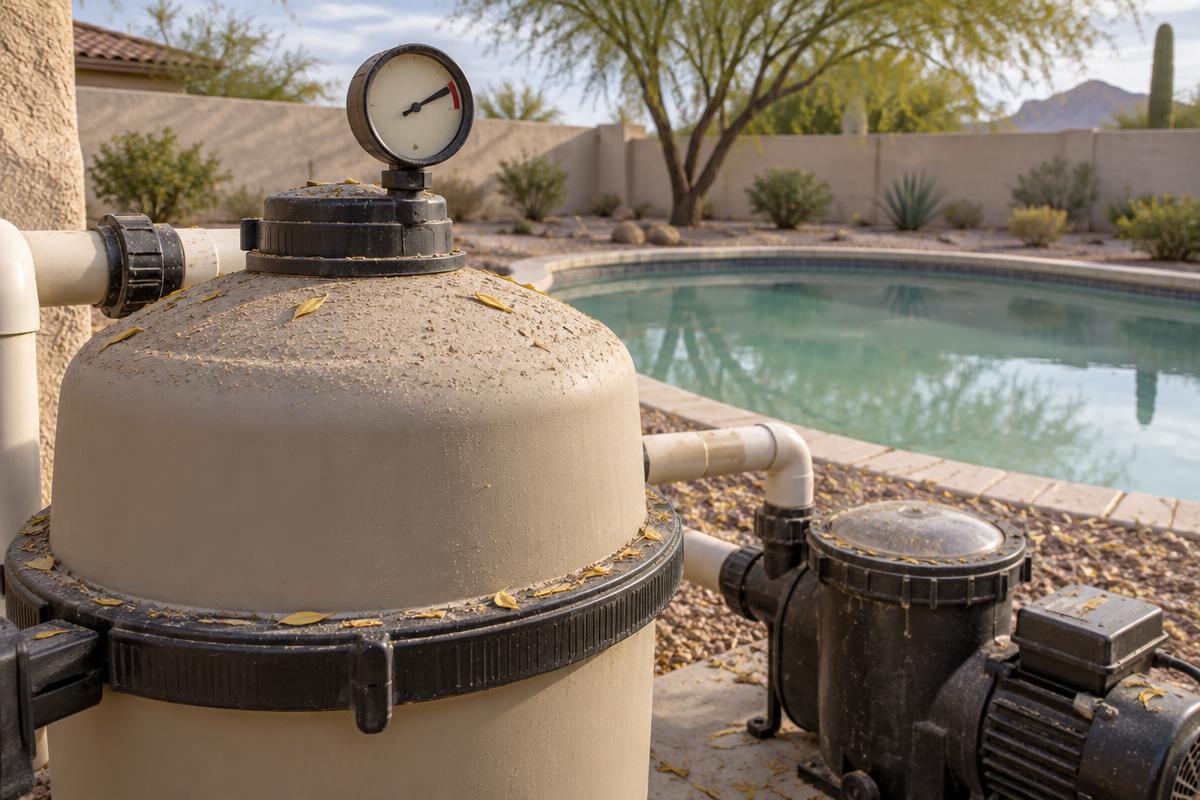
You walk out to the pool and notice the water looks a little cloudy. The returns are barely pushing water. When you check the equipment pad, the pressure gauge is pegged. This is exactly when pool filter cleaning in Mesa, AZ, becomes an urgent task.
Generic filter cleaning schedules fail in Arizona. A single severe dust storm can load a filter with more debris than months of normal use. You must read the equipment, not just the calendar.
A dirty filter chokes off water flow. This forces the pump to work harder, reduces chlorine distribution, and leaves the pool vulnerable to algae. Proper maintenance requires tracking your baseline pressure and cleaning the elements before the flow stops entirely.
The true indicator for filter cleaning is the pressure gauge. An increase of 8 to 10 PSI over your clean baseline means it is time to open the tank and wash the elements.
How Often to Clean Pool Filter Equipment
Every pool operates under different conditions, but establishing a baseline helps you plan. Cartridge filters, which are highly common in the East Valley, typically need a full teardown and cleaning every three to four months.
Diatomaceous Earth (DE) filters require backwashing monthly and a complete grid breakdown at least twice a year. Sand filters need backwashing every few weeks and fresh sand every three to five years. Mesa introduces local variables. Monsoon season, nearby construction, and heavy swimming loads will shorten these timelines significantly.
Never clean a filter based on the calendar alone. The pressure gauge is the only reliable metric for your pool's actual condition.
When to Call a Pool Filter Cleaning Service
Pool Filter Pressure Too High
The gauge reads 8 to 10 PSI above the clean starting pressure, indicating severe water restriction.
Weak Return Flow
The water entering the pool from the wall jets feels noticeably weaker than usual.
Cloudy Water
The pool chemistry is balanced, but the water looks dull and lacks its normal sparkle because fine particles are bypassing the filter.
Short Vacuum Cycles
Your suction-side cleaner stops moving effectively or creeps much slower than normal.
Heater Will Not Fire
The heater registers a low-flow error code because the blocked filter is restricting water movement to the safety switch.
Algae Breakouts
Poor circulation allows dead zones to form in the pool, creating perfect conditions for algae growth despite normal chlorine levels.
A high pressure reading is the most critical symptom. Operating a pump against a blocked filter causes overheating, massive energy waste, and premature motor failure.
What Clogs Mesa Pool Filters
Standard filters trap particles invisible to the naked eye. In the East Valley, several specific environmental factors constantly test your filtration capacity.
Haboobs drop massive amounts of fine dirt into the water. This silt packs tightly inside filter pleats and quickly spikes pressure.
Small yellow blossoms and tiny leaves from common desert trees bypass skimmer baskets and coat the outer surface of the filter.
Arizona hard water leaves microscopic mineral deposits that can turn filter elements stiff and blind the fabric over time.
Sunscreen, body oils, and lotions bind with fine dirt to form a sticky grease that simple water pressure cannot wash away.
The Hidden Cost of a Dirty Filter
A clogged filter creates a bottleneck in your plumbing. When water cannot pass through easily, the pump must exert more effort to move the same volume. For older single-speed pumps, this means wasted electricity and dangerous excess heat at the motor.
For modern variable-speed pumps, the system is designed to maintain flow. When the filter clogs, the pump automatically ramps up RPMs to compensate for the restriction. This uses significantly more power and completely negates the energy savings you expected when installing the pump.
When to Clean vs. When to Replace Elements
Cleaning Is the Right Choice When
- The pressure drops back to the starting baseline after a thorough washing.
- The horizontal bands on the cartridges are intact and tight.
- The pleats are firm, spaced evenly, and not fraying at the edges.
- The internal plastic core is fully intact.
Element Replacement Is Necessary When
- The pressure remains unusually high even after a professional cleaning.
- The plastic end caps on the cartridges are cracked or brittle.
- The filter material is torn, mushy, or permanently stained with scale.
- Fine dirt is visibly bypassing the filter and returning directly to the pool.
Why High Pressure and Acid Are Dangerous
Cleaning a filter element requires the right balance of water volume and chemical treatment. Using the wrong tools will destroy the filtration material instantly.
- Standard pressure washers will tear the delicate fabric of filter cartridges on contact.
- Acid washing without removing oils first bakes grease permanently into the pleats.
- Brushing the filter material aggressively causes the fibers to pill and lose trapping ability.
- Reassembling the tank with an unlubricated O-ring guarantees a massive plumbing leak.
Common Filter Maintenance Errors
Stripping the Band Clamp
Over-tightening or cross-threading the main tension band on the filter housing creates an extreme safety hazard. A loose lid can blow off under pressure.
Chemical Damage
Soaking elements in a strong acid bath without applying a degreaser first will permanently blind the filter media. The acid reacts with the oils, sealing the fabric shut.
Incomplete Rinsing
Leaving chemical cleaner residue on the filter elements will cause severe foaming in the main pool once the pump restarts. Thorough rinsing takes time.
The Best Times for Routine Filter Maintenance
Post-Monsoon
Late summer is mandatory for cleaning out the heavy dust and fine silt left by seasonal storms.
Early Spring
Starting the swim season with a clean filter ensures maximum flow when the algae risk begins to rise.
After Algae Treatments
Dead algae collects directly in the filter. You must remove it immediately to restore proper circulation.
Pre-Winter
Cleaning before water temperatures drop heavily helps maintain stable chemistry and steady flow during the cooler months.
What a Pool Filter Cleaning Service Includes
System Assessment
The technician records the dirty pressure reading and checks the equipment pad for existing leaks or pump strain.
Safe Teardown
The pump is secured off, internal pressure is safely relieved through the air valve, and the heavy filter lid is removed.
Deep Degreasing
Elements are treated with specialized enzymes to break down sunscreen and body oils that water alone cannot touch.
Low-Pressure Washing
High-volume, low-pressure water is used to flush dirt from deep inside the pleats without tearing the delicate fabric.
Manifold and Tank Cleaning
The inside of the fiberglass tank and the internal plumbing manifolds are cleared of heavy debris and sand.
Lubrication and Reassembly
The main tank O-ring is cleaned and lubricated with pool-safe silicone before the system is re-pressurized and checked for leaks.
Never stand directly over a pool filter when restarting the pump. Trapped air can cause the lid to blow off violently if the clamp is compromised.
How to Keep Your Filter Cleaner, Longer
Empty Skimmer Baskets Weekly
Preventing large debris from reaching the pump basket reduces the physical load on the main filter.
Use Skimmer Socks
A fine mesh net over the skimmer basket captures dog hair and pollen before it enters the plumbing.
Maintain Chlorine Levels
Proper sanitation breaks down organic matter in the pool, preventing it from sliming the filter media.
Brush the Pool Surface
Keeping dirt suspended in the water allows the filter to catch it before it stains the plaster or feeds algae.
Run the Pump Long Enough
A filter can only clean water that moves through it. Ensure adequate daily turnover rates for your pool size.
Address Landscaping
Trimming back messy plants near the pool dramatically reduces the organic load on your equipment.
Pelican Pools can manage your filter pressure and handle all teardowns as part of our professional pool service throughout Mesa and the East Valley.
Expert Pool Equipment Maintenance in Mesa, AZ
Pelican Pools delivers experienced, straightforward pool care. We know exactly how Arizona weather impacts your equipment and what it takes to keep your water crystal clear year-round.
Our services include filter cleanings, weekly maintenance, green pool recovery, and full equipment diagnostics. Explore Pelican Pools services or request a free estimate.
Common Questions About Pool Filters
What should normal pool filter pressure be?
Normal pressure varies by system, usually falling between 10 and 20 PSI. The important number is your clean baseline. When the pressure rises 8 to 10 PSI above that starting point, the filter requires cleaning.
Can I wash a pool filter cartridge with a pressure washer?
No. High-pressure water will tear the spun polyester fabric of a cartridge filter. Always use a high-volume, low-pressure nozzle to flush debris out of the pleats safely.
How often do filter cartridges need to be replaced?
Most standard pool filter cartridges last between three and five years in Arizona. You will need to replace them sooner if the bands break, the end caps crack, or the pressure stays high after a thorough cleaning.
Why does my pressure gauge read zero when the pump is running?
The gauge itself is likely broken. Pressure gauges frequently fail due to age, vibration, or internal freezing. Replacing a broken gauge is inexpensive and critical for monitoring your filter health.
Will a dirty filter make my pool heater stop working?
Yes. Pool heaters have internal pressure switches to ensure water is flowing before the burner ignites. A severely clogged filter will trip this safety switch and prevent the heater from turning on.
Is Your Filter Pressure Running Too High?
If your pool jets feel weak, the water is turning cloudy, or your gauge is pinned, your equipment is under severe stress. Get your filter professionally cleaned to protect your pump and restore your water clarity.
