
Comparing Pool Tile Calcium Removal Methods in Mesa, AZ
Hard water leaves a thick white crust on your waterline. Learn how to remove it safely, what professional media blasting costs, and how to protect your glass or ceramic tile from permanent damage.
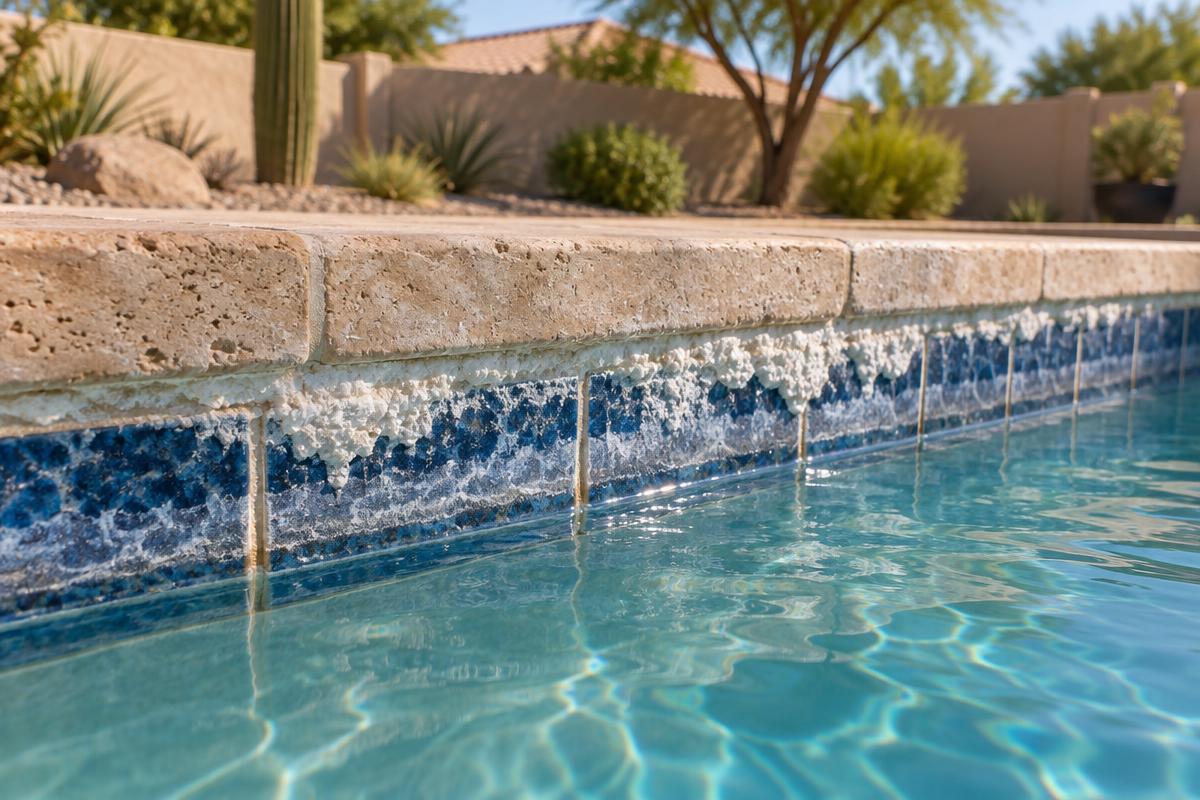
Mesa water is exceptionally hard. After a long summer of high evaporation, that hard fill water leaves a heavy white crust of calcium carbonate along your pool waterline.
Ignoring it simply invites more damage. Left untreated, calcium buildup on pool tile pushes into grout lines and ruins the tile glaze. Researching pool tile calcium removal Mesa AZ costs reveals two practical choices. You can scrub the tile manually with acids and pumice, or you can hire a professional to media blast the surface.
Both methods come with specific costs, timelines, and risks. Using the wrong tool on glass or delicate ceramic tile will cause permanent scratches.
The goal is removing the scale without scratching the tile beneath it. Glass tile, ceramic, and pebble surfaces each require a distinctly different approach.
What Causes the Crust on Your Waterline
Calcium hardness in municipal water drives scale formation. High Arizona temperatures cause pure pool water to evaporate, leaving the minerals behind. Over time, these minerals concentrate and attach to the warmest part of your pool, which is typically the tile line baked by the sun.
You will encounter one of two forms. Calcium carbonate is white, flaky, and reacts easily to mild acids. Calcium silicate is grayish, rock-hard, and requires physical friction to remove.
Evaporation removes the water but leaves the calcium. Every time your auto-leveler adds makeup water, the mineral load increases.
Signs Your Tile Needs Professional Attention
Thick White Banding
A solid crust covers the top three to six inches of tile and feels rough to the touch.
Dull Glass Tile
Glass surfaces lose their reflection, looking frosted or permanently dirty.
Flaking Grout
Heavy scale expands into the grout lines, compromising the seal and causing chunks to fall out.
Rough Pebble Surfaces
The waterline feels like jagged sandpaper instead of smooth, rounded pebble.
Algae Hideouts
Green or mustard algae clings to the porous calcium deposits and resists standard chlorine treatments.
Failed Chemical Tests
Pumice stones and basic foaming descalers no longer make a dent in the gray silicate buildup.
Pumice stones easily scratch delicate tile. If mild brushing with a specialized pool block fails, stop applying abrasive force immediately to protect the glaze.
Estimating Pool Tile Cleaning Cost in Mesa
Pricing for pool tile cleaning mesa contractors offer depends heavily on the pool's size and the severity of the scale.
Most companies charge between $4 and $8 per linear foot of tile. An average residential pool usually ranges from $400 to $800.
Glass tile requires softer, specialized media like Kieserite salt, which increases material costs slightly.
Thick calcium silicate takes significantly longer to blast off than standard calcium carbonate, increasing labor time.
If the pool requires partial draining and subsequent chemical rebalancing, the total service cost goes up.
The Limits of DIY Chemical Tile Cleaners
Walk into any pool supply store and you will find muriatic acid mixtures and foaming descalers. These products dissolve light calcium carbonate effectively.
However, chemical sprays fall short on thick calcium silicate. Spraying strong acids directly onto vertical tile also risks altering your pool pH and dissolving your grout. Heavy chemical applications usually require draining the water completely below the tile line to prevent the acid from crashing the pool's total alkalinity.
Deciding Between Manual Scrubbing and Professional Blasting
Manual Scrubbing Works When
- The buildup is thin and flakes off easily with a fingernail.
- You have basic ceramic tile, not easily scratched glass.
- You only need to clean a small section like a spillway.
- You have the time and energy for intensive physical labor.
Professional Media Blasting Makes Sense When
- The scale is thick, gray, and hard as rock.
- You have glass tile that requires low-pressure salt blasting.
- The entire perimeter of the pool is heavily coated.
- You want the job done in hours without fully draining the pool.
Why Media Blasting is the Industry Standard for Pool Tile Cleaning
Scraping tile with metal tools or harsh pumice ruins the glaze. Media blasting shoots a precise stream of soft abrasives at low pressure to clear the tile safely, leaving the finish intact.
- Specialized media breaks the calcium apart, not the tile glaze.
- The process is fast, typically finishing a standard pool in three to four hours.
- The blasting media is pH neutral and vacuumed out of the pool afterward.
- It restores the original shine of the tile and cleans the grout lines simultaneously.
What Goes Wrong During DIY Calcium Removal
Scratched Glaze
Pumice stones and wire brushes leave permanent micro-scratches. These scratches trap dirt and algae, making the tile look permanently dirty.
Dissolved Grout
Applying raw muriatic acid directly to the wall eats the grout right out from between the tiles, requiring expensive masonry repair.
Chemistry Spikes
Washing thick acid gels into the pool water drops the pH and alkalinity drastically, leading to corrosive water that damages your pump and heater.
The Right Media for the Right Surface
Kieserite (MaxxStrip)
A natural mineral salt. It is safe for delicate glass tile and dissolves easily without altering pool chemistry.
Glass Beads
Ultra-fine, perfectly round beads clear tough calcium off durable ceramic or pebble without pitting the surface.
Baking Soda
Extremely gentle sodium bicarbonate. Used for delicate surfaces but can spike pool alkalinity if not vacuumed quickly.
Walnut Shells
Organic and soft. Less common today due to the organic debris it leaves behind in the water system.
How Professional Pool Tile Calcium Removal Works
Water Level Drop
The technician drops the water level a few inches to fully expose the bottom edge of the tile line.
Equipment Setup
A specialized low-pressure blasting unit and a high-capacity air compressor are staged safely on the pool deck.
Media Application
The operator blasts the scale away using precise nozzle control, moving inch by inch around the perimeter.
Detail Work
Hand tools and soft brushes clear tight corners, infinity edges, and spillways where the blaster cannot reach.
Vacuum Cleanup
A portable pump and vacuum remove the spent media from the pool floor, keeping it out of your main filtration system.
Sealant Application
A protective sealer is applied to the clean tile to slow down future scale formation and enhance the shine.
Never hire a contractor who uses standard sandblasting equipment on pool tile. High pressure and coarse silica sand will completely destroy the finish.
How to Prevent Future Calcium Buildup on Pool Tile
Keep pH Balanced
High pH forces calcium out of solution and onto the tile. Keep your pool pH tightly controlled between 7.4 and 7.6.
Monitor Calcium Hardness
Drain and dilute the pool water when calcium hardness regularly exceeds 400 to 600 ppm.
Brush Weekly
Regular brushing disrupts the initial formation of scale before it hardens into thick silicate.
Use Evaporation Covers
Less evaporation means less makeup water adding fresh minerals to the pool.
Add Scale Inhibitors
Weekly doses of sequestering agents help keep calcium suspended in the water rather than stuck to the tile.
Clean the Filter
Proper water flow prevents dead zones where scale settles easily and accelerates buildup.
Pelican Pools can incorporate water testing, scale prevention, and ongoing chemical balancing into professional pool service throughout Mesa and the East Valley.
Expert Pool Tile Cleaning in Mesa, AZ
Pelican Pools provides reliable pool maintenance, chemical balancing, and tile cleaning support for Mesa homeowners.
Whether you need a full drain and acid wash, weekly service to prevent scale, or guidance on specialized media blasting, we direct you to the right solution. Explore Pelican Pools services or request a free estimate.
Common Questions About Pool Tile Calcium
Can I use a pumice stone on glass tile?
No. Pumice will scratch glass and shiny ceramic tile permanently. Reserve pumice only for plaster or unglazed, highly durable surfaces, and keep the stone constantly wet to reduce friction.
How much does pool tile cleaning cost in Mesa?
Most professional media blasting costs between $4 and $8 per linear foot. An average residential pool usually ranges from $400 to $800 depending on the severity of the scale and the type of media required.
Will removing calcium change my pool chemistry?
Professional salt blasting is pH neutral and does not alter chemistry. Conversely, heavy acid washing by a homeowner can severely drop the pool's pH and alkalinity if the acid is allowed to mix into the main body of water.
Do I have to drain my pool to clean the tile?
No. Professional blasters only lower the water a few inches. The spent media settles to the bottom and is vacuumed out through an independent pump, preserving the water in your pool.
Stop Staring at that White Line
If manual scrubbing is failing and your tile looks terrible, it is time to assess the water chemistry and consider professional removal before the glaze is ruined.
