
Why Your Pool Pump Is Failing in the Arizona Heat
Learn what the noise, leak, shutdown, or weak circulation usually means, which pool pump problems are worth repairing, and when replacement is the smarter investment.
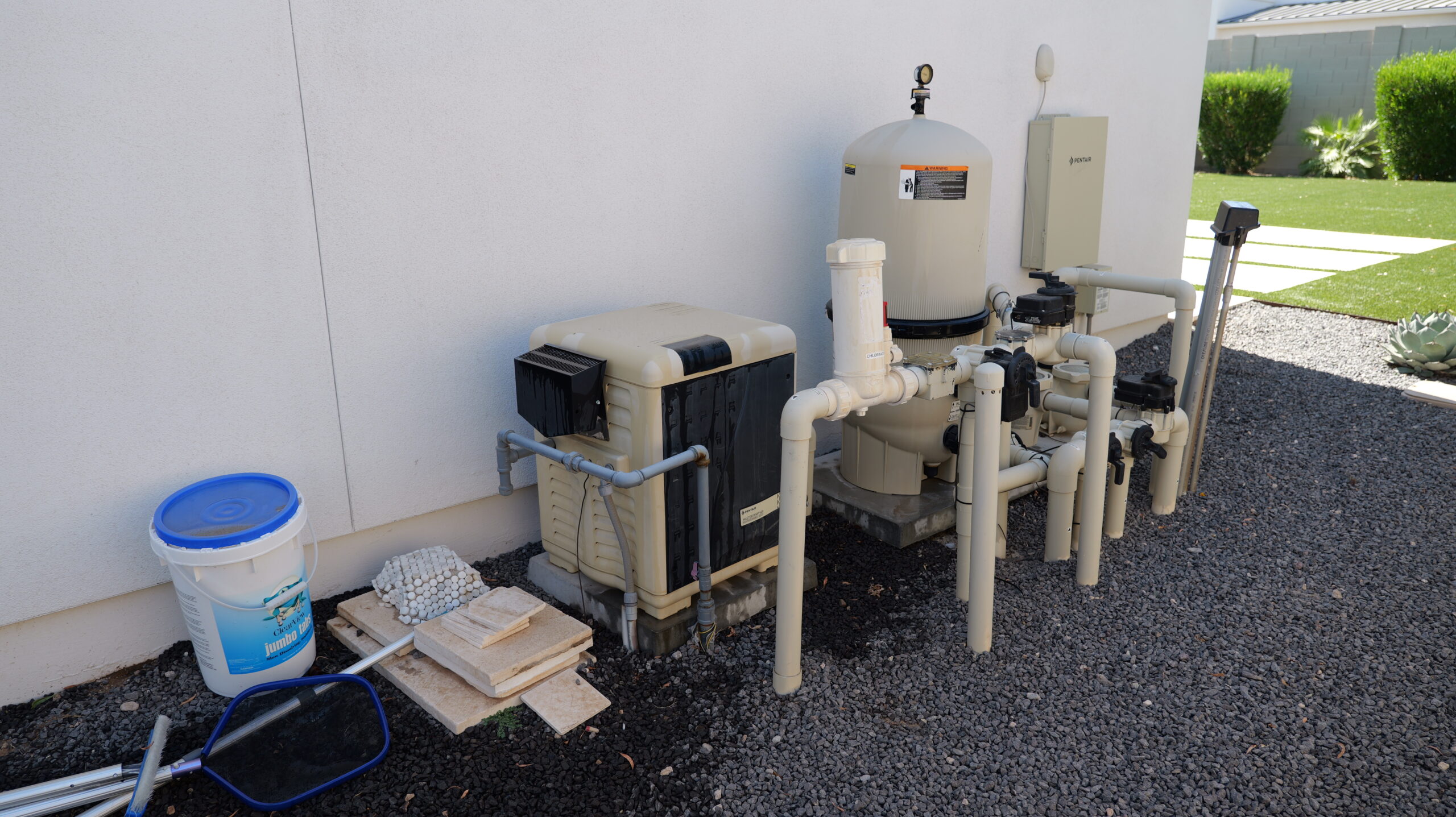
It is 114 degrees outside. You walk past the equipment pad and immediately notice that something is wrong. Maybe there is no familiar motor hum. Perhaps the pump is making a new grinding noise, repeatedly shutting itself off, or leaving a puddle across the concrete.
During a Gilbert summer, a failed pool pump is not a minor maintenance issue that can be postponed. When circulation stops, sanitizer no longer moves evenly through the water, filtration stops removing debris, and a clear pool can quickly become cloudy or green.
Fortunately, many pump failures provide warning signs before the equipment stops completely. Understanding those symptoms can help you catch a small repair before it becomes a full motor or pump replacement.
This guide explains how Arizona conditions damage pool pumps, what the most common sounds and symptoms indicate, and how to make an honest repair-versus-replacement decision. For direct help, contact Pelican Pools for pool equipment diagnostics in Gilbert and the East Valley.
A pump that is screaming, leaking, tripping its thermal overload, or producing a burnt smell should not be left running until it fails completely.
Why Arizona Wears Out Pool Pumps Faster
Pool equipment in Gilbert, Chandler, Mesa, Queen Creek, Tempe, and the surrounding East Valley operates under more demanding conditions than equipment in many milder climates. Four factors often work together throughout the summer.
Heat Soak at the Equipment Pad
A west-facing equipment pad can experience temperatures above the published air temperature because surrounding concrete, block walls, and plumbing radiate heat back toward the motor.
Hard Water and Calcium Scale
East Valley water contains substantial mineral content. Scale can accumulate inside the impeller, seal plate, heater, and salt cell, reducing flow and forcing the motor to work harder.
Monsoon Grit and Debris
Dust storms send fine silt, leaves, seeds, and organic debris into the skimmer. Clogged baskets restrict water and may cause the pump to run hot or cavitate.
Long Summer Run Times
Pools frequently require extended circulation to manage intense ultraviolet exposure, high water temperatures, evaporation, and increased sanitizer demand.
The goal is not only to keep the pump running today. It is to reduce heat, flow restriction, scale, and mechanical strain so the equipment can survive additional Arizona summers.
What Your Pool Pump Is Trying to Tell You
The sound, movement, water level, and timing of the failure often provide useful clues. The following symptoms are among the most common pool pump service calls during Gilbert summers.
The Pump Will Not Start
Total silence frequently points to a power or control problem. Check the breaker, GFCI, timer, and automation schedule first. Summer power interruptions can reset schedules or trip protection devices. When power is present but the pump remains dead, the capacitor, relay, wiring, or motor may require testing.
It Hums but Does Not Spin
A steady hum with no motor rotation often indicates a failed start capacitor. The capacitor provides the initial energy needed to begin turning. Shut the pump off at the breaker rather than allowing it to sit and hum, draw current, and overheat the motor windings.
It Will Not Hold Prime
Confirm that the pool water is high enough to cover the lower portion of the skimmer opening. Then empty the skimmer and pump baskets and inspect the pump-lid O-ring. A flattened, dry, or cracked O-ring can pull air into the system and prevent the pump from holding prime.
It Screams, Grinds, or Rattles
A high-pitched scream or metallic grinding often points to failing motor bearings. Rattling may indicate debris in the impeller or loose equipment. A gravel-like noise may be cavitation caused by restricted water supply.
It Runs and Then Shuts Off
Pool pump motors include thermal protection that shuts the motor down when internal temperature becomes excessive. The cause may be clogged baskets, a dirty filter, poor pad ventilation, restricted flow, low water, failing bearings, or a motor approaching the end of its service life.
Water Is Leaking Under the Pump
A recurring wet spot beneath the pump often indicates a worn shaft seal. Water near the top may come from the lid O-ring, drain plug, union, or gasket. A cracked housing or volute usually requires more extensive replacement.
The Return Jets Are Weak
Weak returns combined with low filter pressure can indicate a clogged impeller, low water level, suction-side restriction, closed valve, air leak, or inadequate priming. Calcium buildup inside the impeller eye is especially common in Arizona pools.
A burning smell, scorched wiring, smoke, repeated breaker trips, or water flowing directly onto the motor requires immediate shutdown and professional inspection.
What Each Pool Pump Symptom Usually Means
| What You Notice | Most Likely Cause | Repair or Replace? |
|---|---|---|
| Total silence at the equipment pad | Tripped breaker, GFCI, timer, automation relay, wiring, or failed motor component | Usually diagnose and repair the power or control issue first. |
| Loud hum but the motor will not spin | Failed start capacitor or seized motor | Often repairable when addressed quickly. |
| Motor runs but basket does not fill | Low water, clogged basket, bad lid O-ring, air leak, or suction restriction | Repair the source of lost prime or restricted flow. |
| Screaming or grinding motor | Worn bearings or motor damage | Repair may make sense on a younger unit; replacement is often better on an aging pump. |
| Runs for a while and shuts itself off | Thermal overload caused by heat, restricted flow, poor ventilation, or dragging bearings | Depends on the root cause and overall age. |
| Water dripping beneath the pump | Shaft seal, lid O-ring, gasket, union, drain plug, or cracked housing | Repair seals and gaskets; replace if the housing is cracked or the motor has sustained water damage. |
| Weak return flow with the motor running | Scaled impeller, clogged basket, air lock, valve position, dirty filter, or suction restriction | Usually repairable after proper flow diagnostics. |
| Burning smell or scorched wiring | Failed windings, overheated wiring, or electrical damage | Motor or complete pump replacement is often recommended. |
Which Pool Pump Problems Are Worth Repairing?
Not every failure requires a new pump. Several common problems are straightforward repairs when the motor, housing, and wet end remain in good condition.
Repairs That Often Make Sense
- Start or run capacitor replacement
- Shaft-seal replacement before water damages the motor
- Lid O-rings, gaskets, drain plugs, and minor seal repairs
- Impeller cleaning and calcium-scale removal
- Union, valve, diverter, timer, or automation-relay repair
- Suction-side air-leak diagnosis and correction
Signs Replacement May Be Smarter
- Seized or badly worn bearings on an older motor
- Cracked volute, pump housing, or structural wet-end damage
- Burned motor windings or visible electrical damage
- Motor damage caused by a long-term shaft-seal leak
- Repeated thermal shutdowns after flow issues are corrected
- Major repair needed on an older single-speed pump
Is a Variable-Speed Pool Pump Worth It?
A single-speed pump runs at one fixed setting and uses full power whenever it operates. A variable-speed pump can circulate water for longer periods at a lower RPM, reducing motor heat and energy use while maintaining consistent filtration.
This operating style is particularly valuable in Gilbert and the East Valley, where pumps often run extended summer schedules and equipment pads experience intense ambient heat.
- Lower-speed operation can substantially reduce electrical demand.
- The motor generally runs cooler and quieter than a comparable single-speed system.
- Lower filter pressure can improve fine-particle filtration.
- Salt systems, heaters, cleaners, and automation can receive more consistent flow.
- Longer circulation at lower speed may improve water quality without operating at full power all day.
A Practical Decision Framework
Pump age is not the only factor, but it provides useful context when combined with the type of failure, motor condition, housing condition, energy use, and repair cost.
How to Help Your Pool Pump Last Longer
Whether you repair the existing pump or install a new one, a few equipment-pad and maintenance habits can reduce stress throughout the Arizona summer.
Provide Shade with Airflow
An open-sided shade structure can reduce direct afternoon heat. Avoid solid enclosures that trap hot air around the motor.
Keep Baskets Clean
Empty skimmer and pump baskets weekly during summer and inspect them after monsoon wind or heavy landscape debris.
Know Clean Filter Pressure
Record the pressure after a complete filter cleaning. Clean or service the filter when pressure rises significantly above that baseline.
Control Calcium Scale
Balanced water chemistry helps reduce mineral buildup inside the impeller, heater, salt system, plumbing, and seal surfaces.
Use the Right Schedule
Match pump speed and runtime to the pool volume, sanitation system, filter, cleaner, heater, and seasonal water demand.
Watch the Water Level
A skimmer pulling air sends that air directly toward the pump, disrupting prime and increasing the risk of heat damage.
Pelican Pools can incorporate pump, filtration, circulation, and water-balance checks into ongoing professional pool service .
What a Pelican Pools Diagnostic Visit Covers
A proper pump diagnosis should identify the source of the failure rather than relying on guesswork at the equipment pad.
- Electrical testing from the breaker, timer, or automation system to the motor
- Start and run capacitor testing where applicable
- Motor-bearing, shaft, seal, and housing inspection
- Pump-basket, lid, O-ring, impeller, and wet-end review
- Suction-side inspection for air leaks and flow restrictions
- Filter-pressure and circulation assessment
- Return-flow review and operating-noise evaluation
- Repair and replacement options based on equipment condition
The objective is to provide a clear answer about whether the current equipment is worth repairing and what a replacement would involve when replacement is the better long-term decision.
Pool Pump Repair and Replacement Near You
Pelican Pools is a family-owned pool service and repair company with more than 40 years of combined experience serving Gilbert, Chandler, Mesa, Queen Creek, Tempe, Ahwatukee, Scottsdale, and surrounding East Valley communities.
Services include weekly pool maintenance, equipment diagnostics, pump and filter repair, green-pool recovery, equipment upgrades, and pool remodeling. Explore the full range of Pelican Pools services or request a free estimate .
Pool Pump Repair and Replacement FAQs
Why is my pool pump humming but not spinning?
A pump that hums without beginning to rotate often has a failed start capacitor. The motor is receiving power but lacks the initial electrical boost required to start turning. Shut the pump off at the breaker because allowing it to hum may overheat the windings and turn a smaller repair into a motor replacement.
How long should a pool pump last in Arizona?
Actual service life depends on the pump model, installation, water chemistry, maintenance, pad temperature, runtime, and flow conditions. Arizona heat, hard water, monsoon debris, and long summer schedules can shorten equipment life compared with milder climates. Proper shade with ventilation, clean baskets, balanced water, and correct operation can help extend it.
Can I run my pool pump fewer hours to make it last longer?
Reducing runtime below what the pool needs may lead to poor circulation, inadequate filtration, sanitizer loss, and algae. A better strategy is often to use a properly programmed variable-speed pump that can run longer at a lower speed and lower electrical demand.
Is a variable-speed pool pump worth it in Gilbert?
Variable-speed pumps are often a strong option for East Valley pools because they can provide extended circulation at lower speeds, reduce motor heat and noise, lower filter pressure, and decrease energy use compared with running a single-speed pump at full power for the same schedule.
Why does my pool pump shut off every afternoon?
Afternoon shutdowns commonly involve the motor's thermal overload protection. Check for clogged baskets, dirty filters, low water, closed valves, poor pad ventilation, and restricted flow. If the problem continues after those issues are corrected, the bearings, windings, capacitor, or motor may need professional evaluation.
How urgent is a leaking pool pump?
A leak should be addressed promptly. A shaft-seal leak may begin as a normal wear repair, but water reaching the motor can damage bearings and electrical components. Early repair may prevent a seal replacement from becoming a complete motor or pump replacement.
Why are my pool return jets suddenly weak?
Weak returns may result from a clogged skimmer or pump basket, dirty filter, low pool water, blocked impeller, suction-side air leak, closed valve, air lock, or calcium buildup. A complete circulation diagnostic can determine whether the issue is located before the pump, inside the pump, or after the pump.
Do Not Wait for the Pump to Quit
A pump that is screaming, overheating, leaking, or repeatedly shutting down in August is unlikely to improve on its own. Pelican Pools will diagnose the system and explain honestly whether repair or replacement provides the better value.
